The importance of TRUST when talking to a neurodivergent colleague

I’ve heard it so many times from people whose businesses are on their neuroinclusion journey:
“How do I have a conversation with someone in my team that’s struggling, and I think it’s because they are neurodivergent, even though they haven’t said they are?”
There’s definitely a few things you shouldn’t do…
Diagnose anyone - don’t say that you think they might be neurodivergent, or ‘you seem a bit autistic’
Assume what is behind any kind of performance challenge or change in behaviour
Pressure someone to disclose a neurodivergence
So I wanted to create a model that’s easy to follow, and aligns with ACAS (the Advisory, Conciliation and Arbitration Service, UK) and Equality Act 2010 (UK) best practice and principles for supporting someone with a disability - and the TRUST model was born!
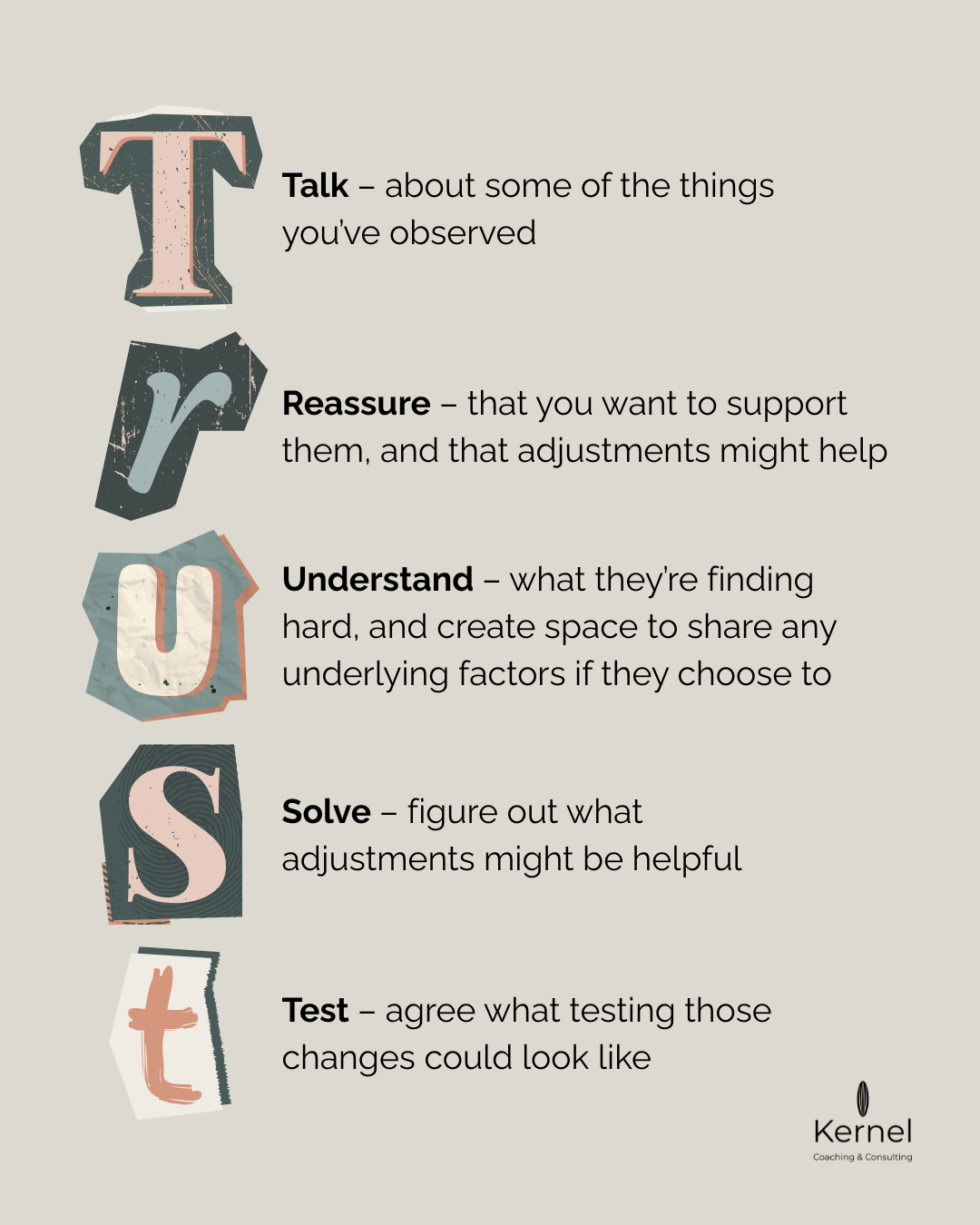
The TRUST model: Talk, Reassure, Understand, Solve, Test
Key things to remember in each stage of the model:
Talk - set up a suitable time for this discussion, either a new meeting or have it as part of a regular 1:1 if you already have those. Be clear about the purpose of the meeting ahead of time - to check how they’re doing, and see if there’s any support they need to be working at their best. Make sure any feedback you share as part of the conversation is evidence-based and not opinion-based.
Reassure - it is essential to create psychological safety in any conversation like this. Assure the person they are not in trouble, and that this is an opportunity to talk about what works or doesn’t work about their current ways of working.
Understand - lead with curiosity, not judgement, and never assume you know what’s going on for a person. Ask coaching-style, open questions about how they are experiencing work at the moment. Example questions might include:
“Is there anything that would make it easier for you to manage the workload or priorities?”
“If there are any underlying factors affecting how work feels right now - whether that’s health, circumstances, or something else, we can talk about support if you want to, but please don’t feel you have to share anything you’re not comfortable talking about with me.”
Solve - co-create some suggested adjustments, and talk about support pathways. Mention that HR can also help if they would prefer to reach out to them for support.
Test - agree how you will test some of these adjustments or solutions (if relevant), or how you will check in with the person down the line if they are working with HR or someone else on support. Make clear again you are here to help.